








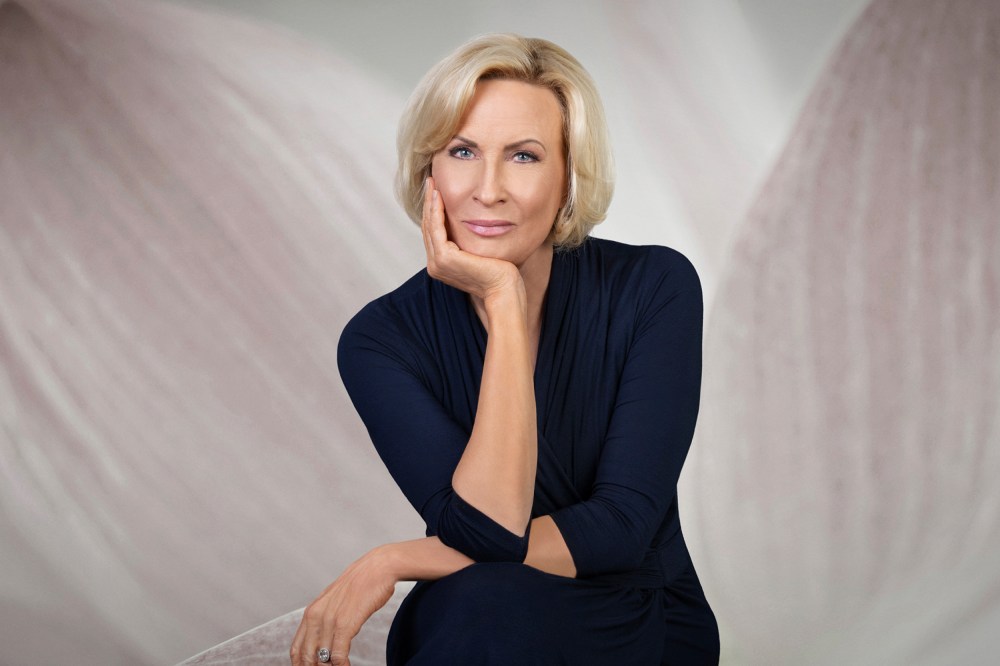
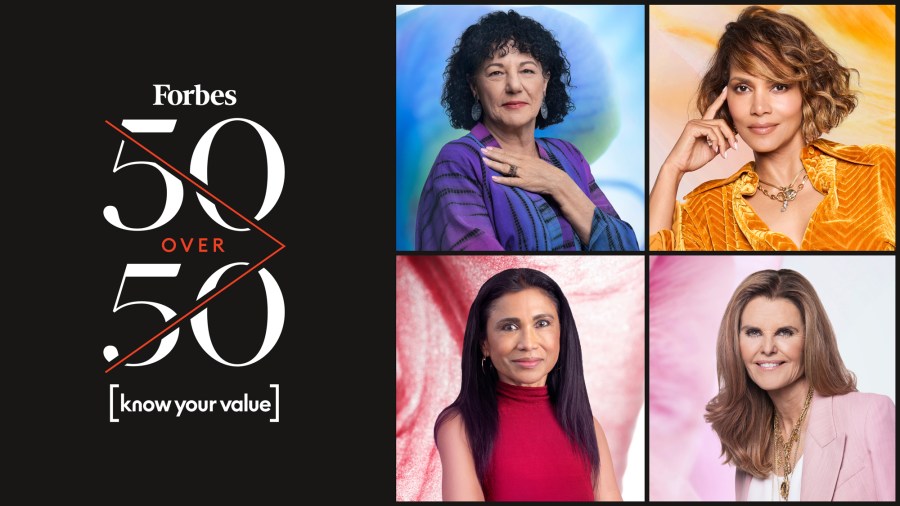
Four years ago, when my Know Your Value platform partnered with Forbes to launch our very first “50 Over 50” list, I thought we were simply opening a door—a long‑overdue invitation for women over 50 to finally take their seat at the table. What I didn’t realize then was that we were tapping into a quiet, yet massive, moment — one that has transformed how I see myself, and how the world sees all of us.
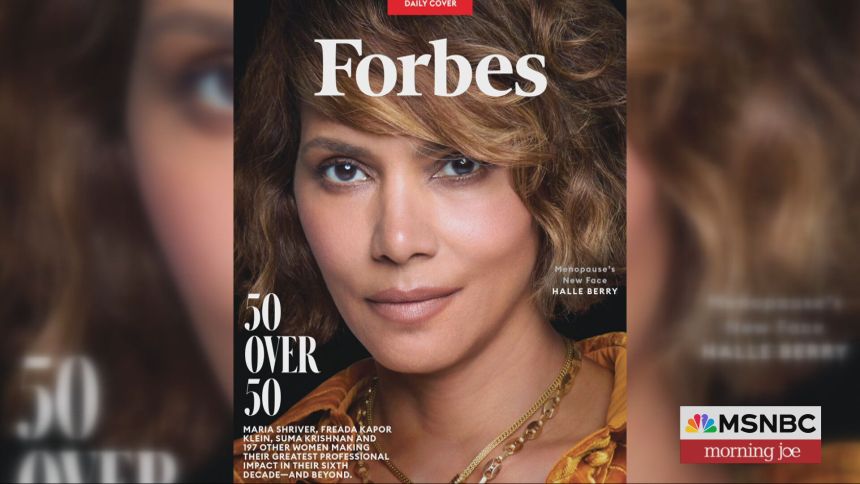
It also challenged the core message of Know Your Value. Instead of urging women to reach their dreams as soon as possible, I realize that women today have a much longer runway to achieve anything and everything they want. This includes finding love, creating a family, and pivoting not just once, but many, many times.
And this year, with the perilous moment that we are in, our list feels like a call to action—a battle cry—and perhaps even a moment to take a stand.
Our democracy is under pressure. Hard‑won freedoms are being stripped away. Budgets that protect the most vulnerable are being gutted. Federal leadership is, too often, in retreat. For many, it feels like the ground is shifting beneath our feet.
But look at the women on this year’s list, and you will see something extraordinary. In this climate, they are not backing down. They are doubling down. They are doing mission‑critical work with unshakable purpose, fighting for the future with a tenacity that should inspire every one of us.
Take Alexis McGill Johnson, 52, president and CEO of Planned Parenthood, who is steering a 109‑year‑old organization through one of its most perilous eras since the overturning of Roe v. Wade.
Or Cecillia Wang, 54, the first woman to serve as National Legal Director of the ACLU, who has argued—and won—immigration cases at the U.S. Supreme Court while calling out raids that tear through communities with devastating impact.
Or Ellie Hollander, 68, leading Meals on Wheels through relentless funding threats, ensuring millions of seniors are fed even as the safety net frays. Or Christina Swarns, 57, executive director of the Innocence Project, who not only leads the charge to exonerate the wrongly convicted but personally argued—and won—before the Supreme Court in Buck v. Davis, overturning a racially biased death sentence.
None of these women have had it easy. They don’t live in a vacuum, either. They fight through headwinds we all feel: Rising costs, dwindling protections from the social safety net, the relentless churn of bad news. And yet, they persist. This year’s “50 Over 50” list may be our most powerful yet. You’ll meet leaders in biotech and business, visionaries in art and fashion, and women blazing new trails in politics, philanthropy, and sports. You’ll meet vanguards breaking records, building companies and still chasing their dreams—some well into their 80s or 90s! There are also many women on this year’s list proving that it’s never too late to pivot. Take 52‑year‑old activist Monica Lewinsky, who launched her own production company and a new podcast, Reclaiming, to candidly share her own—and others’—stories of resilience. Or actress Halle Berry, who has emerged as both an advocate and an entrepreneur for women navigating menopause. And they’re far from alone. And make no mistake: these lists are not celebrations—they are blueprints. Beacons for younger women standing on the sidelines, worried their time is running out. To them I say: there is no deadline on your dreams. You can start over. Start late. Start scared. And still make history. The class of 2025 is here. They are bold. They are brilliant. They are necessary. And they will challenge you, inspire you, and light the way forward.
Mika Brzezinski is the co-host of MS NOW's Morning Joe, founder of “Know Your Value” and author of four best-selling books, including “EARN IT!: Know Your Value and Grow Your Career, in Your 20s and Beyond” (Hachette Books; May 7, 2019) with co-author Daniela Pierre-Bravo. Prior to joining MSNBC in 2007, Mika was an anchor of CBS Evening News Weekend Edition and a CBS News correspondent who frequently contributed to CBS Sunday Morning and 60 Minutes. Recommended


