








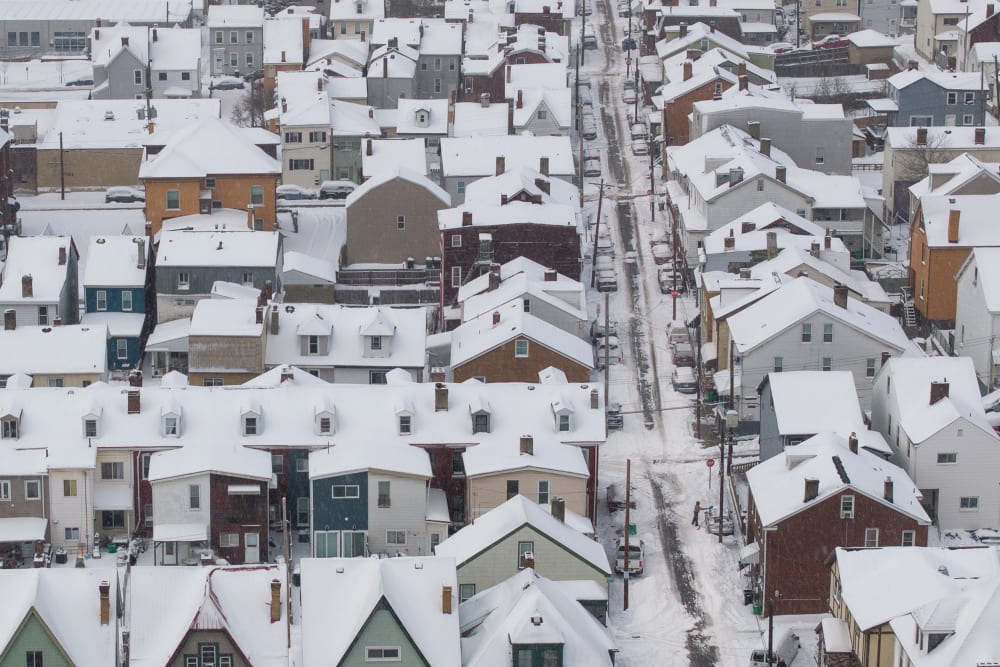
It’s been a bitterly cold winter, and millions of Americans are struggling to pay for heat.
Harrison Pyros, a young professional in Washington, D.C., shares an apartment with four roommates and still feels squeezed.
“A lot of us work from home, so it’s uncomfortable to be bundled up and at your computer,” Pyros told MS NOW. “When you see outside that it’s bright and sunny, it’s a little frustrating to be in an ice box just to keep the bill down.”
He is not alone. Heating costs are expected to rise 9.2 percent this winter, according to the National Energy Assistance Directors Association. About one in six U.S. households is now behind on utility bills, owing a combined $23 billion to electric and gas utilities. Electricity prices are up more than 10 percent since January 2025, and winter bills are projected to jump 11 percent — more than four times the rate of inflation.
“This used to just be a low-income problem, but it’s hitting middle-class families hard now, so everyone’s at high risk,” said Mark Wolfe, the executive director of NEADA.
That reality is creating a broadening crisis with significant political implications heading into the 2026 midterm elections. In recent races in New Jersey, Virginia and Georgia, pocketbook frustrations fueled voter anger — and energy costs, which touch every household in the country, could amplify that dynamic this fall.
“This is real hardship, not hypothetical,” said Wolfe. “Energy assistance managers are seeing it every day this winter, and it’ll hit people again in the summer. Folks are being forced to make hard choices — keeping the lights on or buying groceries; going into debt to provide for their families.”
Trenah Keita, a college student in Ohio who lives with her mother and three younger siblings, knows those choices intimately. Every winter, her family weighs whether they can afford both heat and extracurriculars, like taking part in sports, community events or after-school activities.
“And unfortunately, utility bills take priority,” Keita said.
Wolfe told MS NOW that the solutions are complex and must come from both the federal and state level. At the federal level, he argues, the country needs to develop cheaper, more stable power sources — including the solar and wind energy that the current administration has targeted. At the state level, the most direct lever is public utility commissions, which approve or reject the rate increases that power companies propose. Those same commissions are also grappling with the surging electricity demands of data centers.
“The president certainly could take action, and so could state officials,” Wolfe said. For Keita, the policy debate comes down to something simple: Energy should not be a source of monthly dread. “It shouldn’t be something that we have to choose from each month,” she told MS NOW. “It shouldn’t be something that is stressful. It shouldn’t be that uncertain.” Pyros told MS NOW he hopes lawmakers prioritize affordable energy, but worries that the trajectory is heading in the wrong direction. More families are falling behind, and the debt only compounds. “We’re not being protected by our elected officials or regulators, so all these costs are snowballing onto us,” Pyros said. “It’s hurting our neighbors and our community.”
Arielle Hixson is an Emmy-nominated reporter for MS NOW. Recommended


