









Rep. Thomas Massie, R-Ky., co-author of the Epstein Files Transparency Act, on Sunday slammed what he called Donald Trump’s “Epstein administration” for not fulfilling its legal obligation to release all government documents related to the late convicted sex offender.
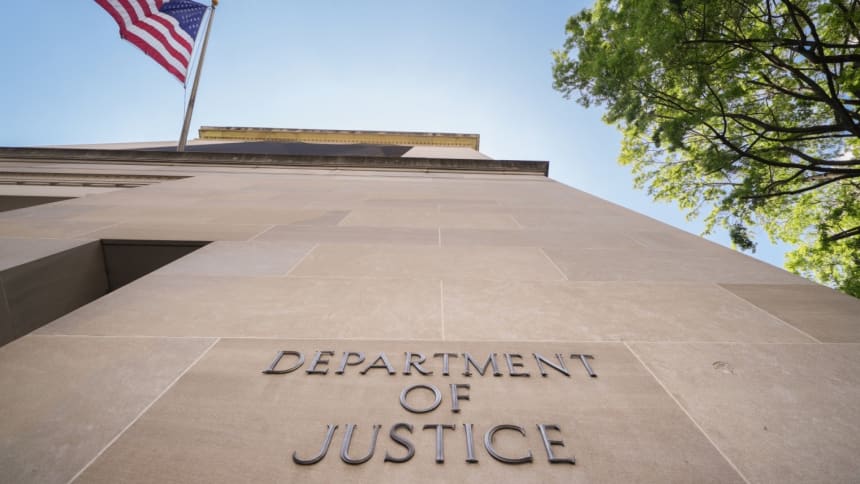
Massie cited a Justice Department letter sent to Congress on Saturday defending its redactions made to the newly released final batch of Epstein documents. Appearing on ABC’s “This Week” show, the GOP congressman noted the DOJ letter, signed by Attorney General Pam Bondi and Deputy Attorney General Todd Blanche, cited “deliberative-process privilege” as a reason for withholding certain records.
“The privileges that applied to the withheld records were deliberative-process privilege, work-product privilege, and attorney-client privilege.,” the Feb. 14 DOJ letter said. The letter listed the names of more than 300 people, many of whom had no direct dealings with Epstein and have long been dead, including Marilyn Monroe, Elvis Presley and Ronald Reagan.
Other names include President Donald Trump, former Presidents Barack Obama and Bill Clinton, Treasury Secretary Howard Lutnick — who was grilled before Congress last week over his association with Epstein — Jeff Bezos and Peter Thiel. None of the people listed have been accused of criminal wrongdoing with regard to Epstein’s actions.
Rep. Ro Khanna, the California Democrat who co-authored the Epstein bill, also criticized the DOJ letter regarding its redactions.
“The DOJ is once again purposefully muddying the waters on who was a predator and who was mentioned in an email,” Khanna said on X. “To have Janis Joplin, who died when Epstein was 17, in the same list as Larry Nassar, who went to prison for the sexual abuse of hundreds of young women and child pornography, with no clarification of how either was mentioned in the files is absurd.” (The Justice Department announced in December that a letter released in a tranche of Epstein files purportedly from Epstein to Nassar, the convicted Olympic gymnastics coach, was a fake.)
Massie objected to the DOJ’s claim of privilege in withholding certain Epstein documents because, he said, the Justice Department “must release internal memos and notes and emails” related to investigative and prosecutorial decisions regarding the Epstein matter.
“It’s important they follow that because then we could find out why they didn’t prosecute Leslie Wexner,” he told ABC’s Martha Raddatz. A legal representative for Wexner said in a statement that the assistant U.S. Attorney in charge of the Epstein investigation “stated at the time that Mr. Wexner was neither a co-conspirator nor target in any respect” and that “Mr. Wexner cooperated fully by providing background information on Epstein and was never contacted again.”
Massie accused the Justice Department of taking down documents before members of Congress were able to review them in their unredacted forms. “We want to be able to look at all these files,” he said. Lawmakers have also been subject to apparent surveillance while reviewing Epstein documents in a private room at the Justice Department.
Rep. Robert Garcia, D-Calif., ranking member of the House Oversight Committee, echoed calls for answers about who was involved in the trafficking of girls and women besides convicted Epstein co-conspirator Ghislaine Maxwell. “We have questions for President Trump, and I think the broader issue here is why wasn’t this investigated when these accusations and these stories actually were heard by the FBI years ago?” Garcia said in a Sunday interview with CBS’s “Face the Nation” show. “Where was the investigation? Where was the DOJ? And this, by the way, is an issue not just in Republican administrations, but also ones led by Democrats. We have to get answers.” The Justice Department, in its letter to the Republican chairmen and ranking Democrats of House and Senate Judiciary Committees, said no records were withheld or redacted “on the basis of embarrassment, reputational harm, or political sensitivity, including to any government official, public figure, or foreign dignitary.” Several of those listed have faced backlash, including ex-prince Andrew Mountbatten-Windsor, who was stripped of his royal titles, evicted from Windsor Castle and faces a potential investigation in the U.K. Massie, who is facing a primary opponent endorsed by Trump, said the president is “still with the Epstein class. This is the Epstein administration and they’re attacking me for trying to get these files released.”
Erum Salam is a breaking news reporter and producer for MS NOW. She previously was a breaking news reporter for The Guardian. Recommended


The DOJ said the lengthy list of high-profile names included in its letter includes “all government officials and politically exposed persons.” But the letter does not differentiate between people mentioned in news stories who likely had little or no connection to Epstein and those who were shown to have communicated with Epstein, Maxwell and other associates.
