








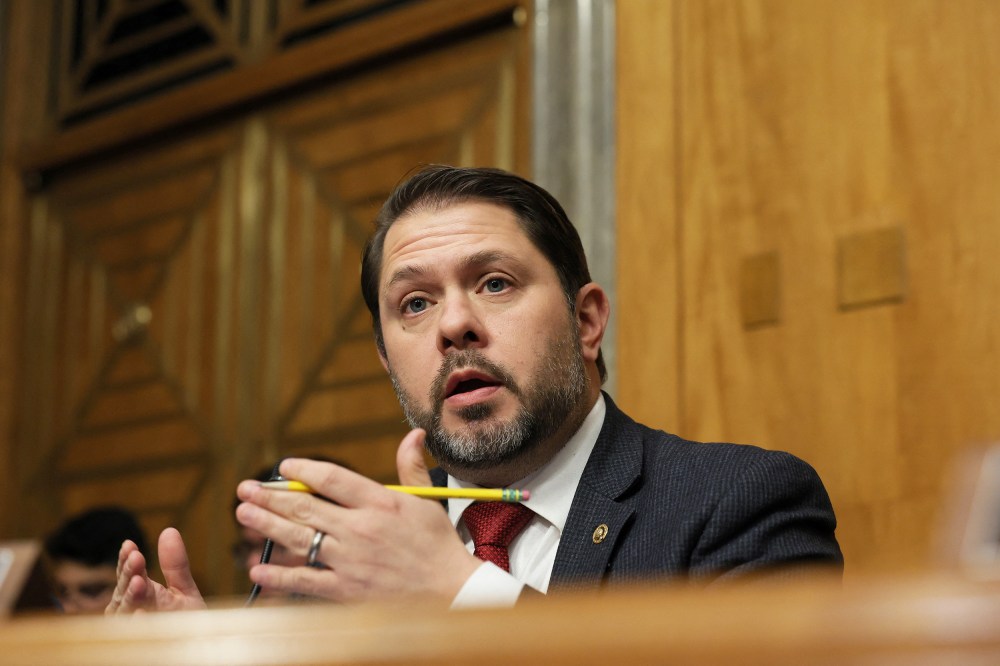
Sen. Ruben Gallego is rolling out a proposal that, he argues, would address a top concern for many Americans: housing affordability.
The Arizona Democrat’s 30-page plan, shared first with MS NOW in advance of its Wednesday rollout, outlines dozens of policy ideas aimed at expanding housing supply and reining in costs.
“Home prices and rents are climbing far faster than wages,” Gallego said in a statement included in the report. “People are working harder than ever, yet struggling to keep up with rising rents, unaffordable down payments, and mortgage and insurance costs that are out of reach and continuing to rise.”
“We need bold, all-of-the-above, pro-housing solutions,” he continued.

The plan’s rollout comes as Gallego, an 11-year veteran of Capitol Hill, appears to be positioning himself for a presidential bid in 2028 — when housing prices are expected to remain a potent issue for voters.
Gallego’s housing proposals boil down to four central policy categories: building more homes, reforming zoning and permitting rules, expanding housing assistance and tenant protections, and making homes resilient in the face of natural disasters.
If enacted, Gallego says the plan would lead to 8.5 million “new and preserved” homes across the country over the next decade.
Housing affordability remains a top concern for Americans. When U.S. adults were asked what items they find “the most challenging” to afford, a Politico poll conducted in November found housing costs ranked second — just behind groceries.
To boost construction, Gallego lists more than a dozen ideas, including expanding the lower-income housing tax credit, establishing federal tax credits to help finance the conversion of former office buildings into residences, expanding federal financing options to help develop more accessory dwelling units — more commonly known as in-law suites — and opening up some federal lands and areas near airports for development.
Gallego acknowledges that making his plan a reality would require local and state governments, which play an outsized role in local permitting and land use regulations, to work closely with the federal government.
To push them to do so, Gallego says federal lawmakers should offer grants to so-called pro-housing jurisdictions while threatening to reduce federal support for communities that obstruct housing development “despite clear regional needs.”

On the regulation front, Gallego calls for streamlining environmental reviews for certain smaller-scale construction and rehabilitation projects. And he says the Department of Housing and Urban Development should more readily delegate environmental reviews to localities and states to help make the process — which can sometimes drag on for years — more efficient.
Gallego’s plan also cites a report from the Federal Reserve, which found the top reason American renters opted to rent rather than to buy a home is they can’t afford a down payment.
To address that, Gallego proposes a pilot program, lowering the Federal Housing Administration’s down payment requirements from 3.5% to 1% — or even 0% — for “credit-worthy, first-time homebuyers who struggle to save but demonstrate reliable rent payment history.”
His other ideas to rein in costs include a home loan program for first responders and teachers and a ban on “algorithmic rent-setting schemes” that, he says, allow for “landlord collusion.” To make homes more resilient in the face of mounting natural disasters, Gallego argues lawmakers should reinstate federal programs aimed at helping communities build disaster mitigation projects, such as flood control systems, and helping homeowners weatherize their properties. The former, called the Building Resilient Infrastructure and Communities grant program, was abruptly canceled last year by the Trump White House. He also says lawmakers should make home insurance deductible from federal taxes. In the short term, Gallego’s housing proposal keeps him in sync with the issue Democrats are making a central theme of their 2026 midterm message: affordability. For months, top Democrats on Capitol Hill have argued that Trump and congressional Republicans have not fulfilled a 2024 campaign pledge to rein in prices — hoping that voters will trust them instead. The proposal also gives Gallego a foothold in a discussion that is likely to dominate the national conversation for years to come — and has captured recent attention. Over the past week, President Donald Trump rolled out his own proposals to address housing costs in posts on social media, saying he would take steps to “ban large institutional investors” from buying up homes and would instruct Fannie and Mae and Freddie Mac to buy up $200 billion in mortgage bonds, with the goal of lowering mortgage rates. While those steps may increase the consumer purchasing power, a recent story in The Wall Street Journal noted that industry analysts believe for that to have a meaningful effect, the administration would also need to find ways to increase the housing stock.
Kevin Frey is a congressional reporter for MS NOW. Recommended


