


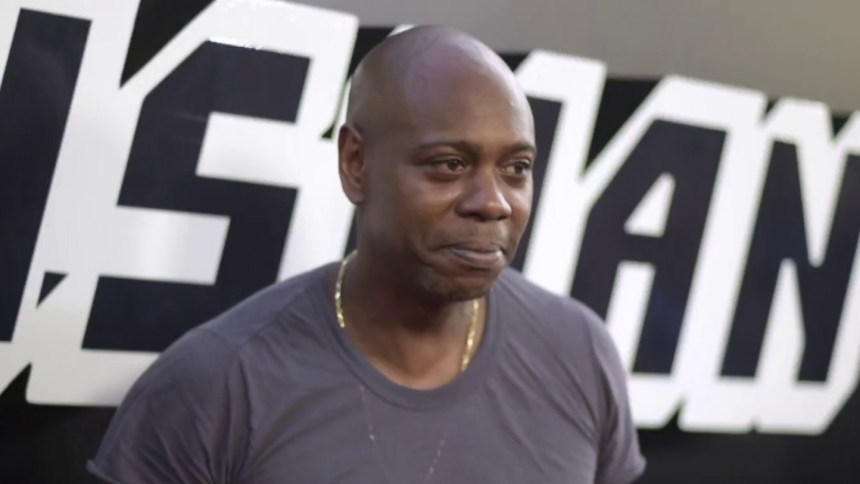
Dave Chappelle isn’t a thoughtless comedian. To the contrary, his interview with NPR’s Michel Martin in his beloved Yellow Springs, Ohio, is more evidence that he is intensely reflective, and careful and deliberate with his words, when he discusses stand-up comedy and his role as “an ambassador” of the genre. The child of two professors, Chappelle has long exhibited an exacting, Ph.D.-level analysis of his art form and the world around him — even as he insisted to Martin that at his core, “I’m a filthy nightclub comic. … That’s all I see myself as.”
The world sees him as much more, obviously. Which is why “That’s all I see myself as” both feels like a cop-out and suggests Chappelle believes that the way he sees himself is the only way he should be seen. Transgender people and trans rights groups have described his anti-trans routines as hurtful, especially in a political climate that has scapegoated them and threatened them with social erasure. But Chappelle told Martin, “I don’t feel like anything I do is malicious or even harmful. And I think if I did hurt somebody with my work, boy, they would have been laid that at my feet.”
I’m a filthy nightclub comic. … That’s all I see myself as.
DAVE CHAPPELLE TO NPR’S MICHEL MARTIN
But Chappelle has kicked away the hurt that people have laid at his feet. In his telling, his jokes haven’t harmed trans people. It’s those other people’s jokes.
“I did resent that the Republican Party ran on transgender jokes,” he told Martin. “I felt like they were doing a weaponized version of what I was doing.” In particular, he called out Rep. Lauren Boebert, R-Colo., who he said was one of many lawmakers who asked for a photo with him as he visited the U.S. Capitol before a performance in Washington.
“She posted the picture before I could even get from there to the show and says something to the effect of ‘Just two people that know that it’s just two genders,’” he said. But bringing up Boebert and Republicans feels like a deflection when transgender people who did feel targeted by his routines had already said his jokes were harmful.
“The thing about punching down is that it’s called ‘punching’ for a reason,” Nicholas Mitchell, a professor at the University of Kansas and author of the book “On Bigotry,” said in an email Wednesday about Chappelle’s conversation with Martin. “It’s inflicting harm from a place of security because they can’t hit back.”
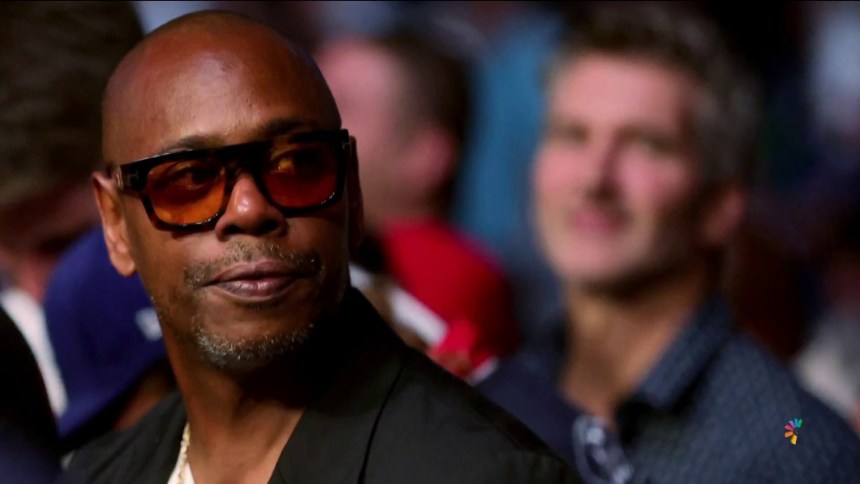
But when Martin asked Chappelle, “What about people who feel like you’re punching down?” he visibly rolled his eyes. Perhaps that was a reflex, because his words were rather diplomatic. “I don’t want to be dismissive of that sentiment,” he said.
Even so, Chappelle called the outrage over his anti-trans jokes “a media phenomenon” and “rage baiting,” and said, “They almost reported on it as if I was doing something other than a comedy show. I could go on about this, but I gotta be careful.”
You see? He’s careful. As a rule. And that’s what some of his critics have found especially problematic: He’s deliberate about what he does.


“Dave doesn’t want to own the anti-trans sentiment he helped sane-wash over the objections of trans people,” Mitchell said in his email.
He rejects the idea that as a 52-year-old international superstar, he has more responsibility than he did as a precocious 14-year-old.
Not only that. He rejects the idea that as a 52-year-old international superstar, he has more responsibility than he did as a precocious 14-year-old filthy nightclub comic. He wants to be true to the work, he told Martin, not true to being big.
But being true to the work of comedy should mean being true to its rules, which include limits on who can say what. As brilliant as he is, Chappelle has long played dumb about how that rule works. In his 2019 Netflix special, “Sticks and Stones,” the title of which is a defense in itself, Chappelle recounts a conversation with a standards and practices exec at Comedy Central who wouldn’t let him use the anti-gay slur “f––––t” in a sketch on his eponymous show. But they let him use the anti-Black slur “n––––r,” Chappelle said he pointed out. He said that he was told, “Dave, you’re not gay,” and that he responded, “Well … I’m not a n––––r, either.”
That punch line insults our intelligence. It’s outrageous for Chappelle, who, with his profligate use of that racial slur and his lampooning of Black stereotypes, has long exploited a rule that lets comedians inside a group say things people outside the group can’t say, by pretending to be ignorant of that rule. Based on that anecdote, it doesn’t appear Comedy Central was being hypocritical by letting him use one slur and not another. It appears the network was being consistent.
“You are not a trans person,” Martin says to Chappelle in an apparent prod for him to acknowledge that his outsider status should in some way govern the jokes he tells. Frustratingly, Chappelle chooses to see such concerns as intolerable censorship — even as he expresses resentment that Republicans “ran on transgender jokes.”
It sounds like Chappelle wants trans people to see a difference between his anti-trans jokes and the anti-trans jokes of the politicians trying to erase them. But if he doesn’t want trans people to see him the same way they see those politicians, then he should take care not to sound like they sound.

Jarvis DeBerry is an opinion editor for MS NOW Daily. He was previously editor-in-chief at the Louisiana Illuminator and a columnist and deputy opinion editor at The Times-Picayune.