It seems so simple, at least when Republican legislators describe it.
“It’s radical that Democrats don’t want to require photo identification when people come to vote,” Rep. Bryan Steil, R-Wis., said on Fox Business this week. He told a story to that point: “I flew home to my home state of Wisconsin, went to buy a six-pack of beer. The clerk recognized me, asked for my ID, confirmed it and then I was allowed to buy the beer.”
It was “nuts,” he said, “that we protect our beer more than our ballots.”
Speaking on the same program, Steil’s colleague Rep. Zach Nunn, R-Iowa, made the same point: You have to use an ID to show you’re 21 if you want to drink, so why not do the same for voting? That is what the SAVE Act, which both recently supported in the House, mandates for elections across the country — which, in the context of casual drinking, simply makes sense.
Except that it doesn’t.
I suppose we might as well start by considering the scale of the nefarious activities at issue. Data from the federal government shows that underage drinking is less of a problem than it used to be, with more than 150,000 arrests for drunkenness, DUIs and liquor law violations at the beginning of the century winnowing down to about 26,000 in 2020 (the most recent year for which this data is available).
This is only among those under the age of 18, mind you. It is very safe to assume that 18-to-20 year-olds are more likely to have tried buying beer while underage than 10-year-olds, and so probably still represent tens of thousands of arrests a year.
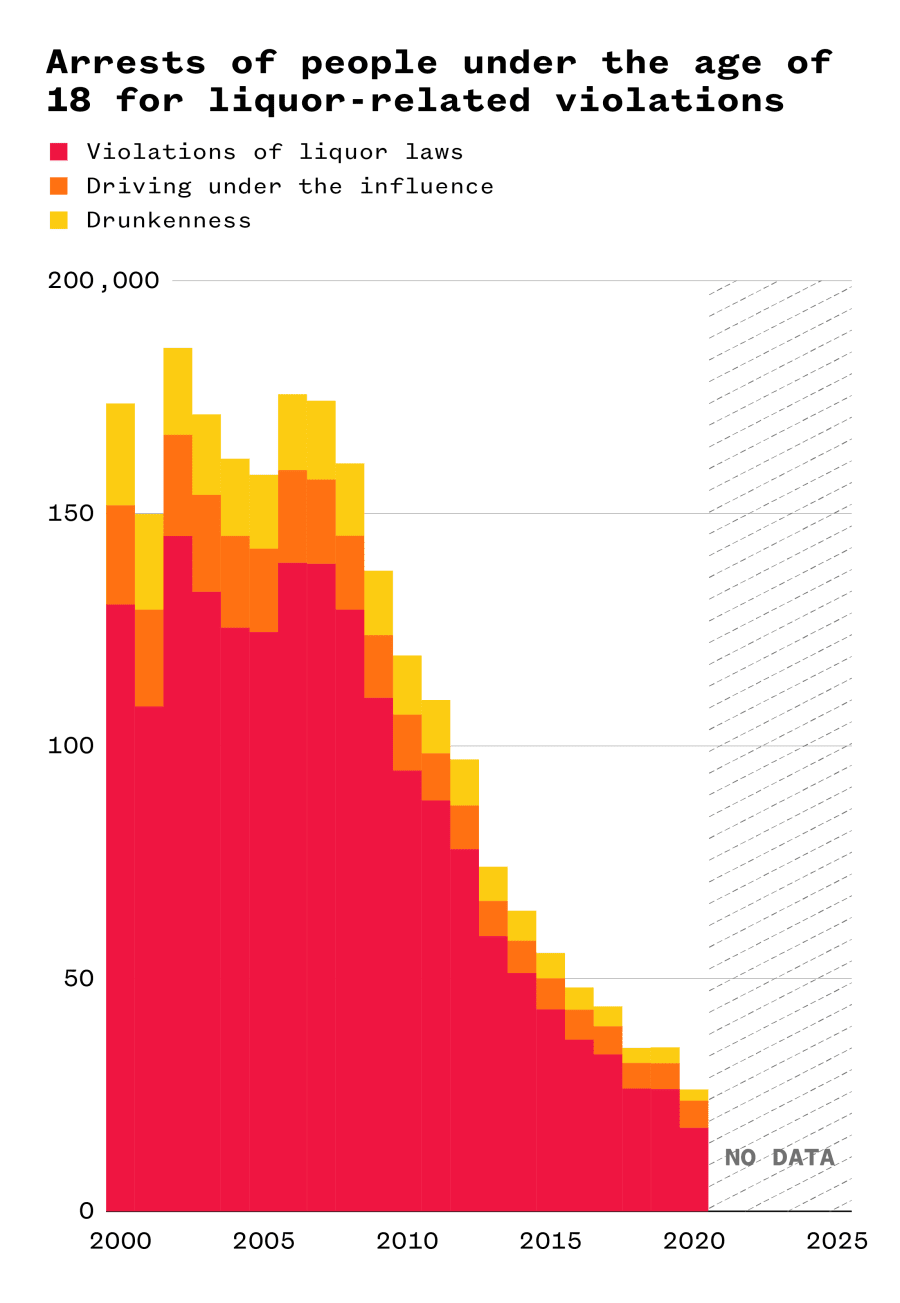
For our purposes, though, it doesn’t really matter. After all, 26,000 arrests a year is still far, far larger than the average number of arrests since 2004 for impersonating someone in order to cast a fraudulent ballot. That happened an average of … one time each year from 2000 to 2024. Not 1,000. One.

Those aren’t my numbers. Those are numbers from the Heritage Foundation’s “Election Fraud” database, an online tool meant to give the impression that election fraud is rampant and hugely problematic. Yet the best they could gin up in terms of in-person voter impersonation is 34 incidents during a period in which about 1.5 billion votes were cast in federal elections.
That frequency is roughly equivalent to gathering all of the residents of New York and Florida in a big field and having to pick a specific person at random. Actually, doing that is slightly more likely than finding an example of in-person voter fraud among federal votes cast from 2000 to 2024.
Other research shows that in-person fraud — the type presumably prevented by requiring voter ID — is similarly rare. It is far, far, far, far (far!) more rare than incidents of teenagers trying to buy cheap wine.
There are other critical differences between these two situations as well. If a person over the age of 21 is improperly prevented from buying beer, they can go to a different store on a different day and try again. If someone allowed to legally vote is prevented from doing so at their polling place, they may not get to vote at all. And voting, unlike getting drunk, is a constitutionally afforded right.
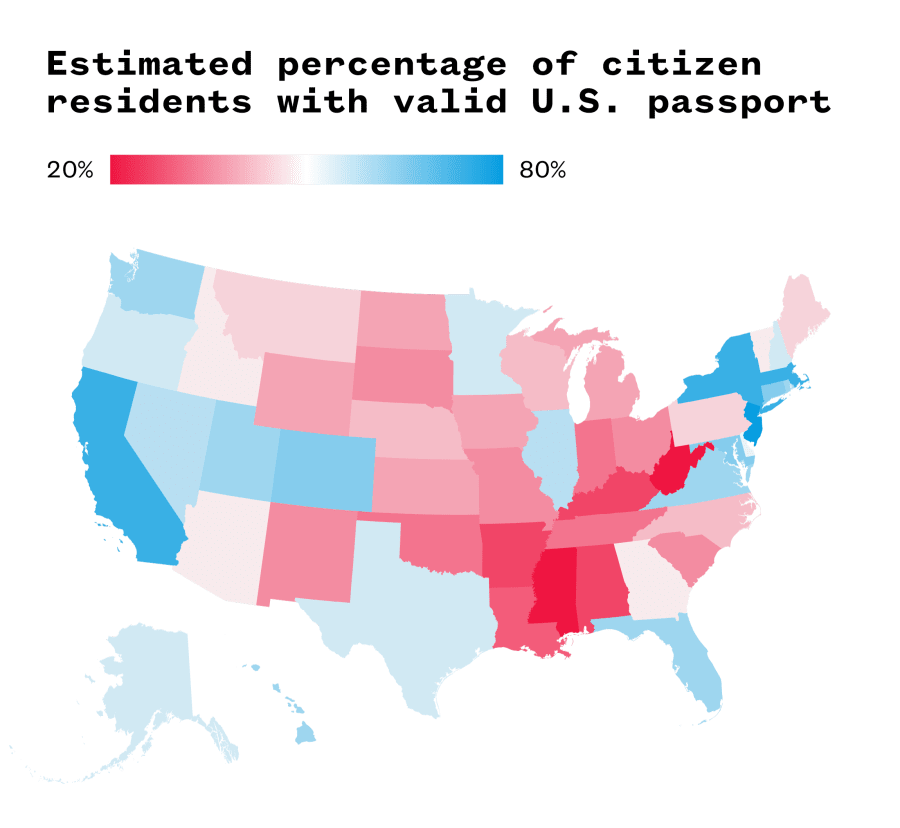
What’s more, a driver’s license would likely not be sufficient for meeting the identity standard included in the SAVE Act. The legislation traces its roots to a 2024 effort from Donald Trump and House Speaker Mike Johnson, R-La., to prevent noncitizens from casting votes in U.S. elections. This is something that happens about as much as people heading to polling places pretending to be someone they’re not, which is to say it almost never happens. (See the libertarian Cato Institute’s analysis of state-level investigations.) The Heritage Foundation database had only 24 such examples in a Reuters analysis completed that year. It is also something that is already illegal. But, nonetheless, Johnson and Trump allies held an event in May 2024 touting the need for the SAVE Act’s putative protections against noncitizen voting, an event that was attended by several people who’d attempted to help Trump overturn the results of the 2020 presidential contest. In case you needed even more evidence of what’s really at play here. In the past, Republicans have promoted voter ID requirements in part because those rules disproportionately excluded Democratic voters from casting ballots. People who are less likely to have government-issued ID tend to be lower income, which often overlaps with communities of color. An analysis of voter ID laws implemented in Kansas and Tennessee found that younger and Black residents (both Democratic-leaning groups) were more likely to be affected — with more than 100,000 fewer votes cast than would otherwise have been expected. By requiring proof of citizenship, and not just identification, the SAVE Act might be more likely to exclude Republicans than Democrats. The Center for American Progress estimated how many residents in each state had valid U.S. passports. The map below shows what they found. While it may look like a map of the election results, it isn’t. Redder states are ones where less than half the citizen population was estimated to have a valid passport; bluer ones are those where more than half did. On average, 40% of citizens in states that voted for Trump in 2024 are estimated to have valid passports. In states that didn’t vote for him, the average is 60%. But, again, this is not a problem that was demanding a solution. There are functionally no illegal votes cast by noncitizens or by people pretending to be other people, and therefore there is no urgent need to remedy any such problem. Verifying that someone who is trying to buy beer is 21 helps keep kids safe from alcohol abuse. Verifying that someone who is trying to vote is a citizen is going to exclude exponentially more citizens — as recent ProPublica reporting shows — than prevent illegal votes. And for what? To keep a candidate from getting 128,294 votes instead of 128,292? It is essential to repeat that the Trump administration and the president in particular cannot be assumed to be acting in good faith here. This is about federal control of state election systems, with an eye toward introducing obstacles that can be leveraged to secure power. No number of cutesy stories about legislators picking up a sixer of Coors should distract us from the legislation’s real intent.
Philip Bump is a data journalist and MS NOW contributor.