Tuesday night’s results in Texas’ Senate primaries have Democrats in the Lone Star State — and everywhere else — sharing excited whispers: Could this be the year that Texas turns blue?
In fairness, Democrats have been whispering that question for quite a few years now. It’s regularly the case that good candidates or favorable environments or (and here the whispers become downright audible) both lead the party to wonder if maybe, this time, finally, Texas will once again elect a Democrat to statewide office.
For a long time, these mutterings were a function of demographics. So many people were moving from the northeast to the Sun Belt, New York Democrats becoming Austin ones! Not to mention that the population was so heavily Hispanic, and Hispanic voters vote so heavily for Democratic candidates!

But then the Trump era arrived. That calculus changed. Blue Texas seemed to drift further into the mists of fantasyland.
Then came Tuesday. Texas Hispanics turned out heavily for Democratic primary races. State Rep. James Talarico won his U.S. Senate primary in part because of Latino support. And his opponent in November might just be the polarizing, scandal-plagued state Attorney General Ken Paxton — who is headed to a runoff for the GOP nomination against incumbent Sen. John Cornyn. It’s a year in which Democrats nationally are expected to overperform, thanks to President Donald Trump’s unpopularity. And so: whispers. Maybe this is the year Texas turns blue.
But here’s the thing about that: “Turning blue” — or red for that matter — doesn’t really mean that a party’s candidate won one race in one year. What Texas could possibly do is shift back from deep red to reddish-purple.
I’m going to be pedantic on this point, in part because I find the habit of exaggerating political shifts to be both annoying and noisome. Trump’s approval rating dropping two points does not mean it is PLUMMETING or BOTTOMING OUT. And even if Talarico were to win a Senate seat, that no more makes Texas blue than Doug Jones winning a Senate seat in Alabama nine years ago made that state a Democratic haven.

Usually we use “red” and “blue” as descriptors of states based on presidential voting in the state. This is a relatively recent affectation, solidified during the 2000 election. It is one that obscures the actual variation in how states vote — even between voting heavily for one party and voting only narrowly for that party.
Consider the past nine presidential elections, taking us back to 1992. There are only 27 states that have consistently voted for presidential candidates of the same party during that time; the other 23 all switched at least once. Even states such as Texas that consistently voted with the same party saw wide swings in margins; in Texas’ case, from 3 points to 22 points during that time.
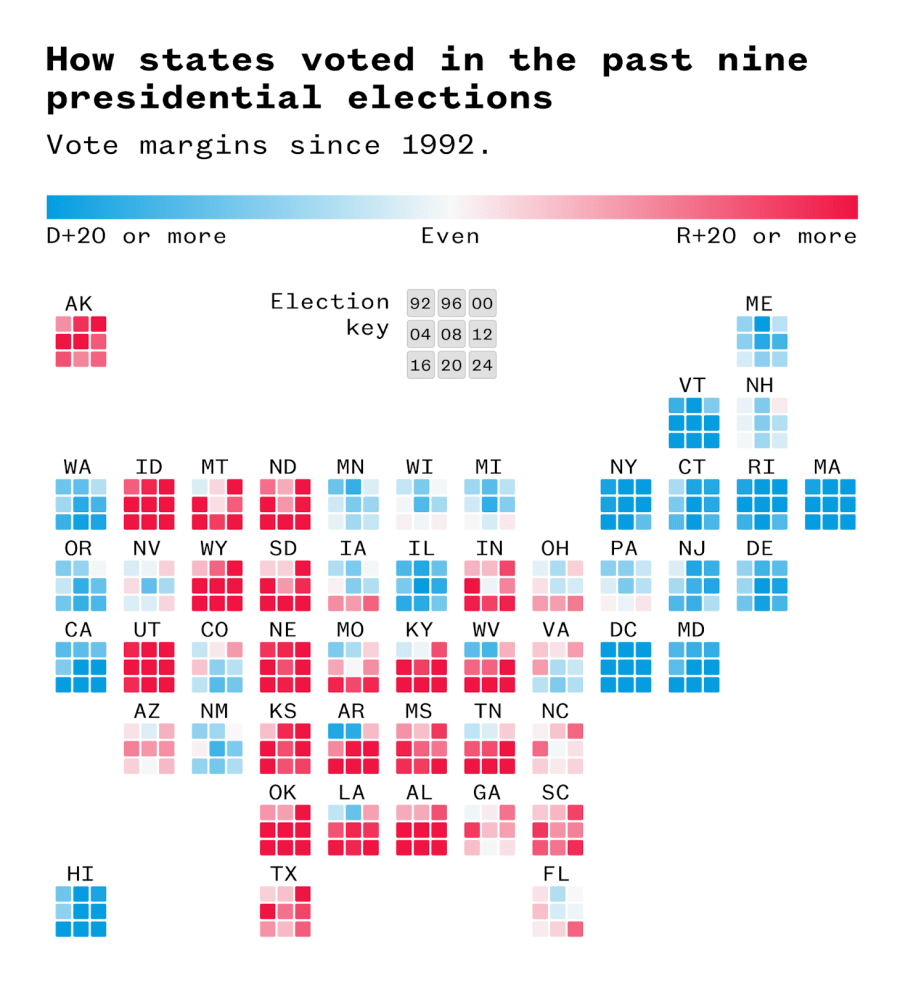
If we’re using “red” and “blue” to describe presidential voting, we are having to constantly update our descriptors of what constitutes “red” and “blue.” Pennsylvania was a blue state in 2013 and then a red state in 2017 and then a blue state in 2021 and then a red state in 2025. This suggests that “blue state” and “red state” are perhaps not useful descriptors for Pennsylvania.
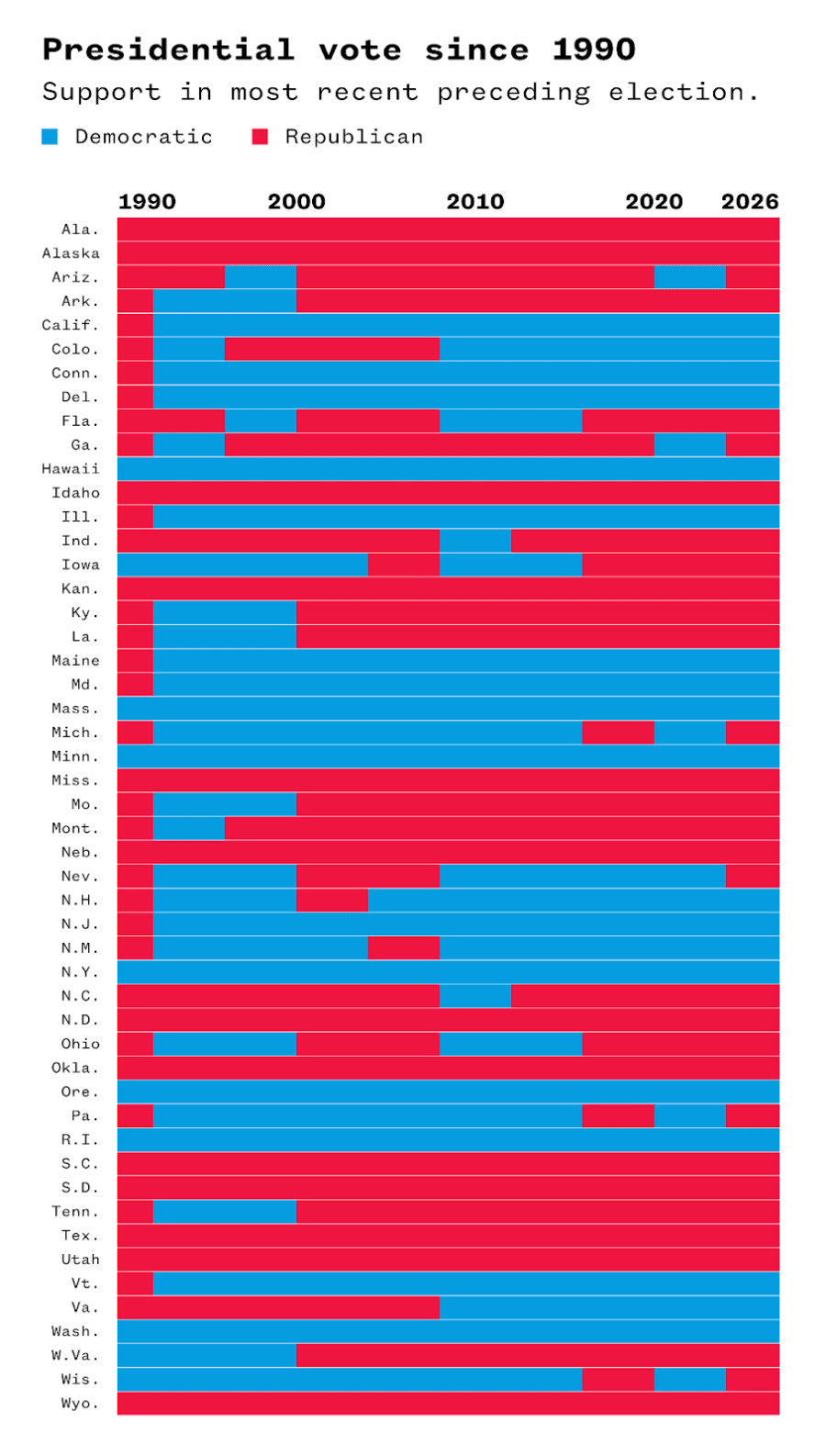
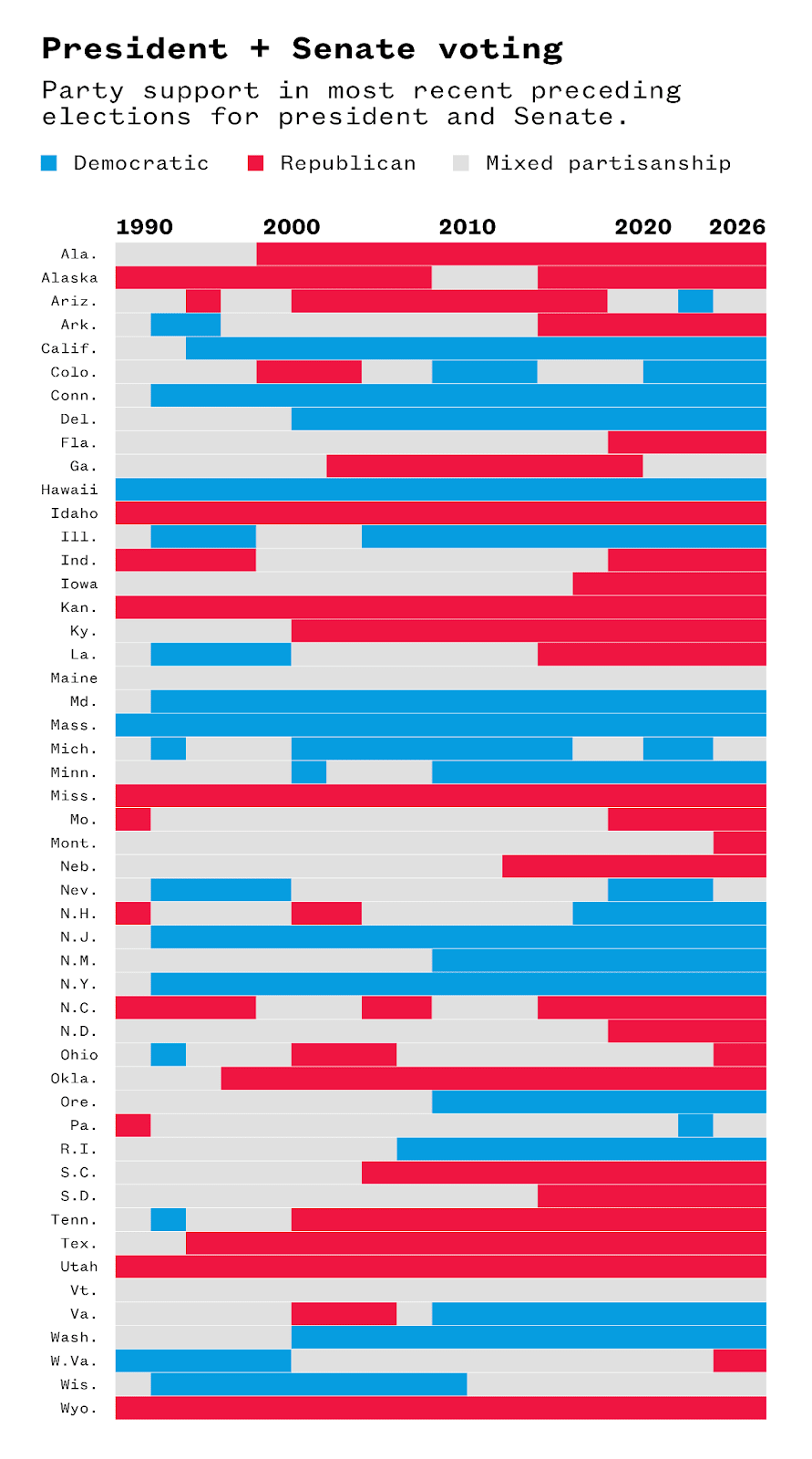
But this also ignores other state-level voting. If we throw Senate votes into the calculus, we see that all but a handful of states have either flipped partisan loyalty or, at some point since 1990, have voted for senators or presidents of differing parties in overlapping periods.
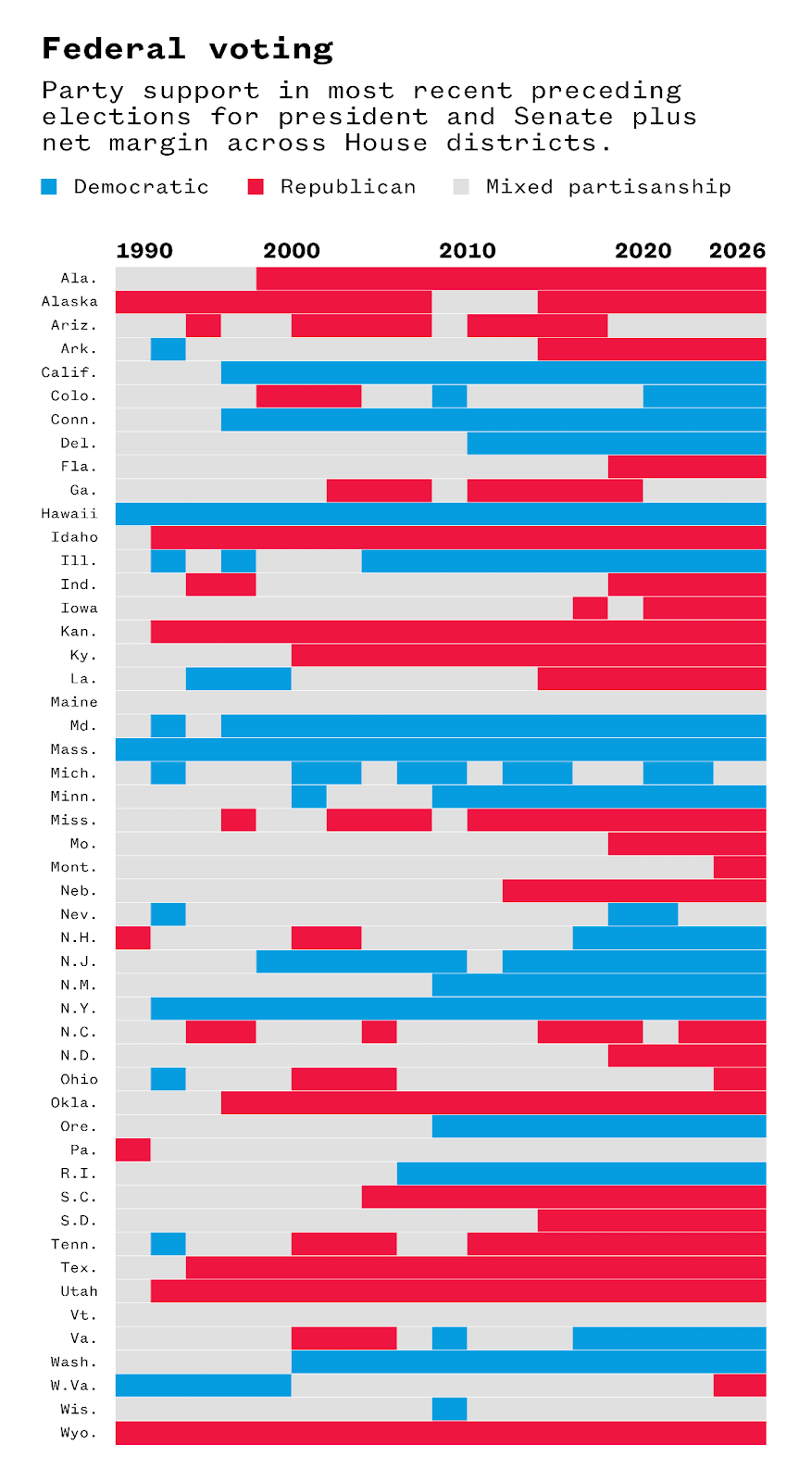
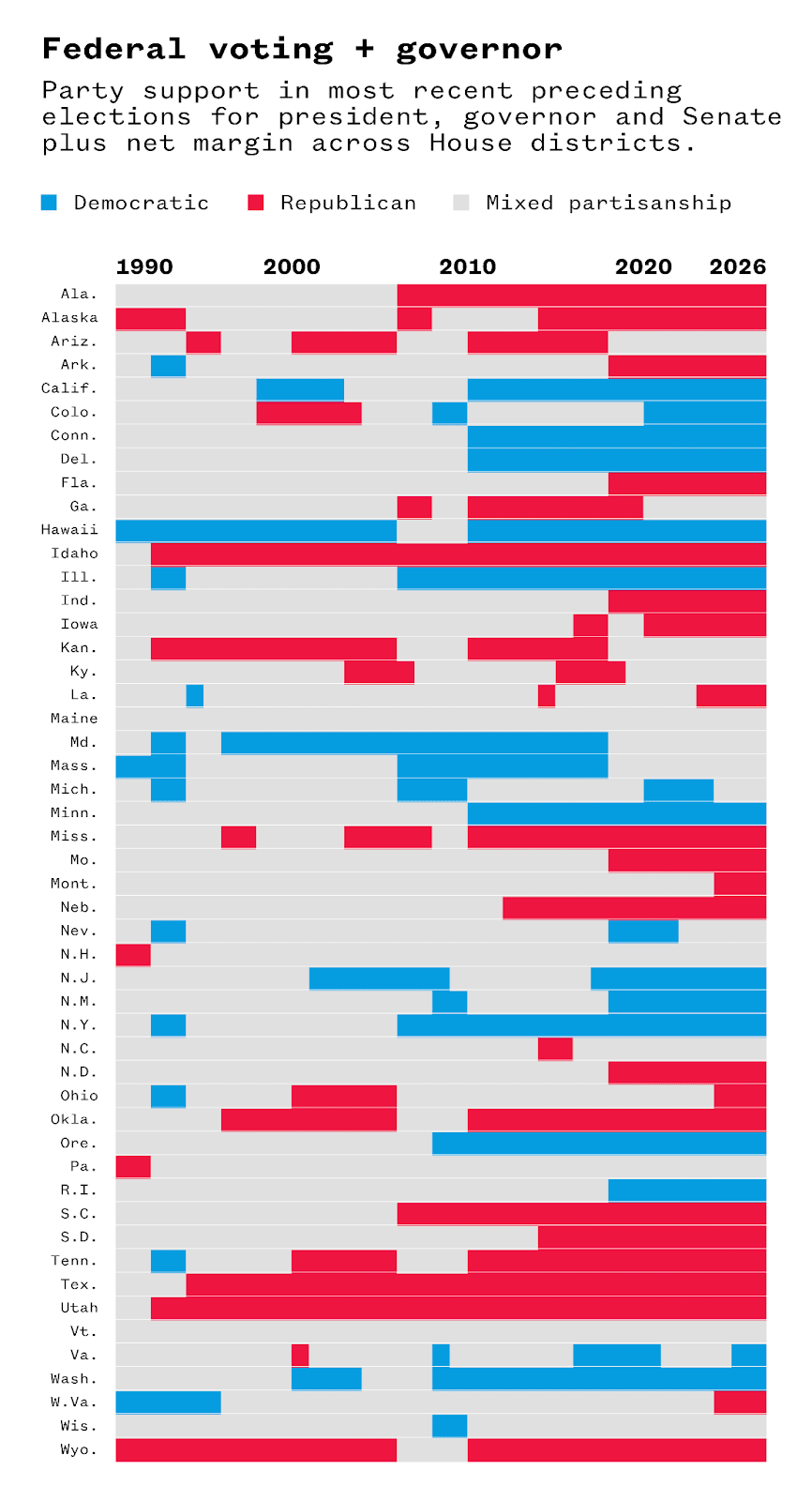
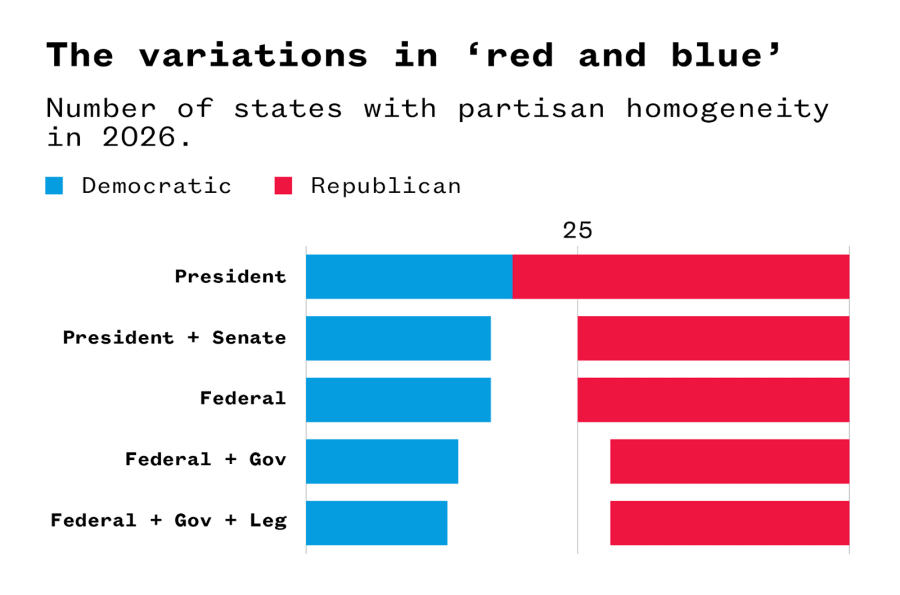
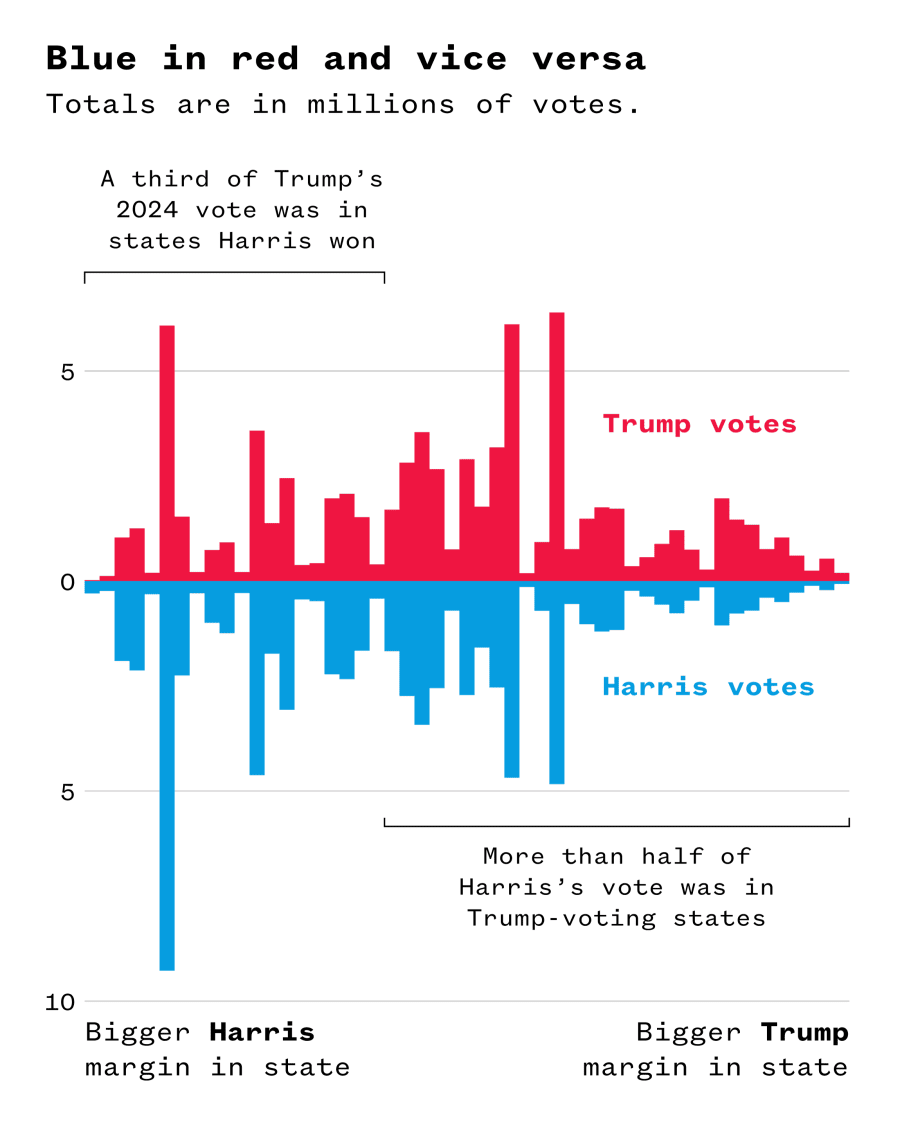
You’ll notice that I’m counting independents as independents here, which I am doing because, well, independents are independents. Anyway, add in statewide House voting — that is, all of the votes cast for Democrats and Republicans in House races in the state — and the descriptors become even less accurate. And then consider governors! My analysis indicates that precisely zero states have been consistently Republican or Democratic at the federal and gubernatorial level since 1990. We can go a level deeper and look at the constitution of state legislatures, too. But there’s really no need. You can see below how treating “red” and “blue” as broad descriptors of the views of voters in a state collapses as you consider more actual elections. At this point in 2026, there are about as many consistently “blue” states as there are ones with mixed voting histories between the parties. There are slightly more “red”/Republican ones. There’s a point to this pedantry. Clumping states into partisan categories based on presidential outcomes elides the actual complexity of voting in those states that often manifests at other levels of government. Heck, it obscures the diversity of the presidential vote alone! In 2024, a third of Trump’s vote came from states that Vice President Kamala Harris won. A majority of the votes she earned came from states she lost. Will Texas turn blue in November? No. It will still be a state that backed Trump by double-digits in 2024. Might it become a state, like Georgia, where both parties are suddenly competitive at a state level? Perhaps — or maybe even probably! But this tells us a lot more about the simplistic way in which we describe state-level politics than what’s changing within individual states.
Philip Bump is a data journalist and MS NOW contributor.