


One night in September 2022, the Ukrainian military launched a drone attack targeting the frigate Admiral Makarov, the flagship of Russia’s Black Sea Fleet. As the drones closed in, Ukrainian commanders suddenly realized something was wrong. Their communication links with the drones — connected by the Starlink satellite-based internet service — were inoperable.
At that point, the mission was aborted. Some of the drones which had lost connectivity washed ashore without exploding. Most sank into the sea or self-destructed. Ukrainian commanders reported that only two drones returned undamaged.
What would’ve been a dramatic victory for Ukraine had been thwarted by a most unlikely defender. Few knew at the time that that day was a watershed moment in U.S. politics regarding how money and power are leveraged by nongovernment actors.
The world’s richest man was now personally dabbling in international conflict.
When, earlier that year, SpaceX and Tesla CEO Elon Musk purchased Twitter (which he later renamed “X”), it wasn’t expected to significantly impact U.S. government policy. But the purchase — and the criticism he received for it — opened Musk up to a whole new world of politics. This was a world in which he suddenly saw unconventional ways to leverage his wealth to impact policy. He realized he didn’t have to play by the normal quid pro quo rules that other wealthy political funders did.
When Ukrainian military commanders — who are explicitly supported by the U.S. Defense Department — requested help on that September night, Musk declined to turn on Starlink so that they could complete their attack on the Russian navy. The world’s richest man was now personally dabbling in international conflict. And not only that, but he was also taking the side of America’s adversary.
Musk later explained, “If I had agreed to their request, then SpaceX would be explicitly complicit in a major act of war and conflict escalation.” As a business decision, that’s superficially understandable. But Musk’s act was of far greater significance: an American tycoon deciding what a U.S. ally could and couldn’t do. Neither the Defense Department, the White House, lawmakers nor voters had a say.
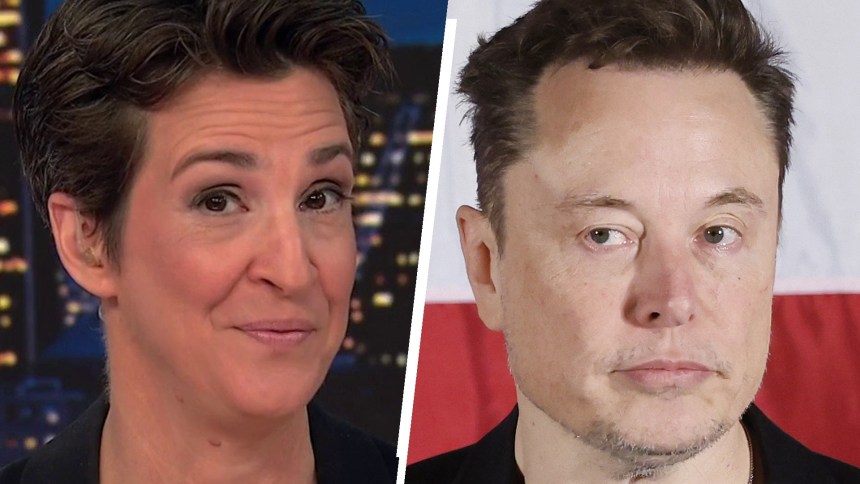
While Musk attributed his decision to a desire to keep peace, his actions tell another story. That month, he proposed a plan to end the war by having Ukraine cede territory to Russia. Naturally, Moscow praised the idea, while Ukrainian President Volodymyr Zelenskyy denounced it. Since then, Musk has been caught regularly promoting Russian disinformation on X. And last week, The Wall Street Journal reported that Musk has allegedly been in regular contact with Russian President Vladimir Putin since 2022. The Journal reports that “discussions between Musk and Putin touched on everything from business and geopolitics to personal topics.”


Taken together, it’s clear that Musk is at least sympathetic to the Russian cause. This, of course, is a massive problem for U.S. national security. Musk, a major defense contractor with a high-level security clearance, is using his power to help America’s adversaries. Nothing about this is OK.
Musk’s and Trump’s efforts are unique in American history.
To make matters worse, Musk has now joined forces with former President Donald Trump, whose affection for dictators in Russia, North Korea and elsewhere is well documented. Musk has poured more than $100 million into Trump’s presidential campaign this year alone, most of it through his newly formed America PAC.
The Trump-Musk alliance is a natural fit because they see their roles similarly. Just this month, Bob Woodward revealed in his new book that Trump has had as many as seven private phone calls with Putin since leaving office. In recent weeks, Trump has bragged about holding calls with Israeli Prime Minister Benjamin Netanyahu, implying that he’s running his own foreign policy separate from the current administration.
This is all incredibly dangerous and the U.S. government should not allow it. While the wealthy and powerful have always had an outsized hand in U.S. politics, Musk’s and Trump’s efforts are unique in American history. What makes them particularly malignant is that they are shaping a paradigm where billionaires are not inherently loyal to U.S. interests. It used to be a given that business leaders, while often unscrupulous, should never be openly hostile to the very government that made them rich in the first place. Trump and Musk portend a new, fragmented era in which government policy is potentially only one of several.
This represents a unique threat to our republic. Lawmakers on both sides should take steps immediately to protect our vital interests. We cannot cede them to any individual, especially those with fascist inclinations and questionable loyalties such as Elon Musk and Donald Trump.

Brandon Friedman
Brandon Friedman is the CEO of Rakkasan Tea Company. During the Obama administration, he worked as deputy assistant secretary for public affairs in the Department of Housing and Urban Development and director of digital strategy in the Department of Veterans Affairs. He served two tours as an infantry officer in the Army’s 101st Airborne Division in Afghanistan and Iraq. You can follow him on Bluesky.